
Gaming
Nowadays, gaming has become an integral part of daily life. Is your child also constantly gaming or is there no longer a balance between gaming and their social life? It is important that gaming is a topic of discussion, but how do you ensure that it is discussable? If you would like more information about this, you have come to the right place with us.
Target audience
Children today grow up with a smartphone, tablet, and other digital devices within easy reach. Even at a young age, they often know exactly how these devices work — but they don’t always see the potential risks. For parents, it can sometimes be convenient when a child is quietly occupied behind a screen, giving them time to cook, help another child, or simply take a short break.
Not only children, but also teenagers and adults, are spending more and more time gaming. Gaming has become a normal part of daily life, but it’s important to maintain a healthy balance between gaming and social interaction.
🎮 Gaming can be fun, educational, and relaxing — as long as it doesn’t interfere with school, friendships, or a child’s mood. That’s why it’s important to start open conversations about gaming from an early age and to show genuine interest in what your child is doing.
Many gamers use their own gaming language, even outside the game. As a parent, it’s valuable to understand what your child is talking about — it makes it easier to stay connected and discuss boundaries in a positive way.
💭 Important Questions for Parents
❓ When is there an imbalance between gaming and social life?
❓ How can I, as a parent, discuss gaming without conflict?
❓ When does gaming behavior become problematic (without being an addiction)?
❓ What could be the cause of problematic gaming behavior?
- noob
- pro
- bug
- easter egg
- clan
- clipping
- bunny hopping
- camping
- co-op
- cut scene
- DLC
- TDM
- FPS
- graphics
- framerate
- framedrop
- HUD
- LAG
- raid
- looting
- skeer

Method
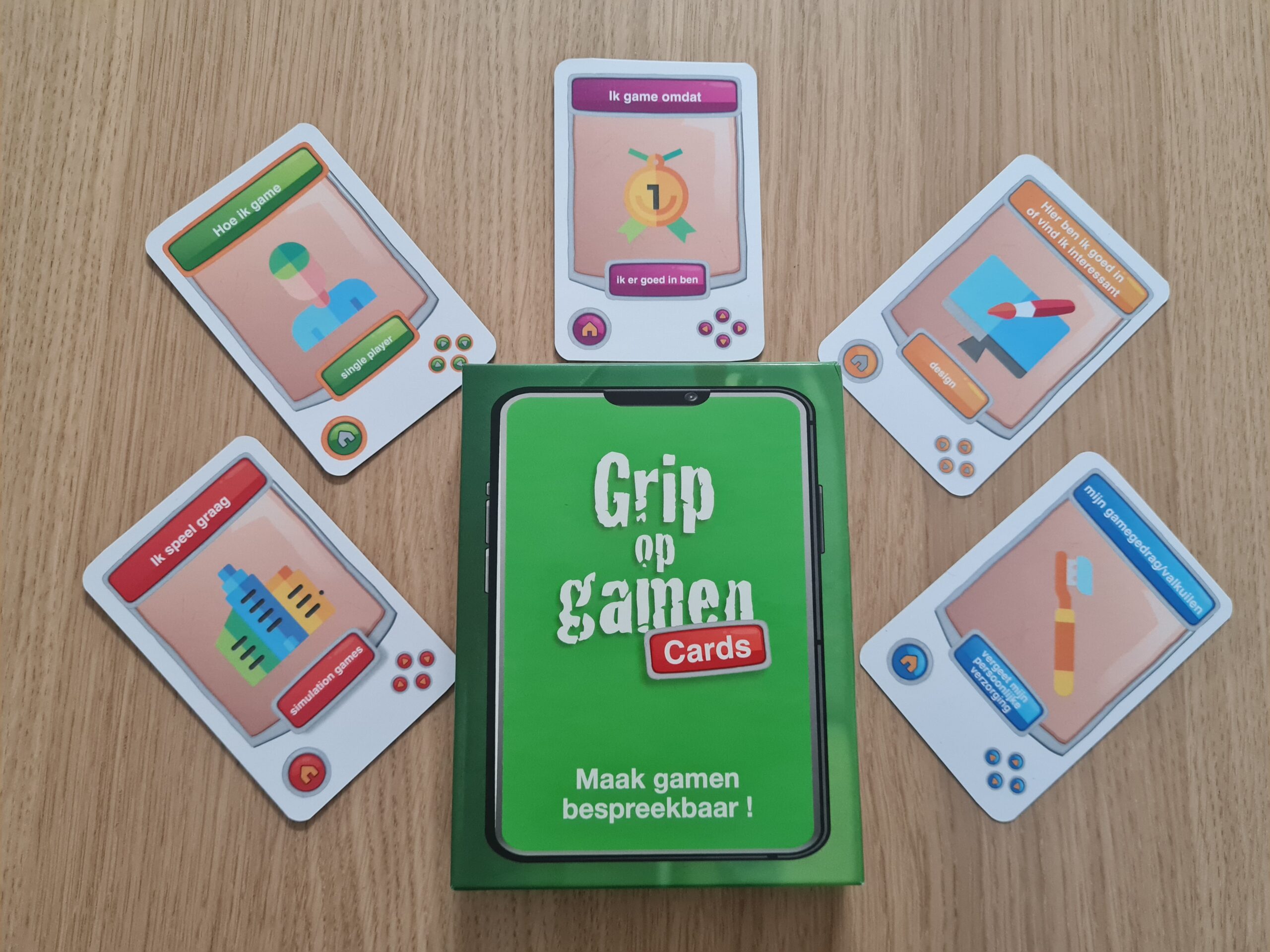
To make gaming an open topic of discussion, we use the Grip on Gaming method.
This method is not intended for children or teenagers with a gaming addiction — that requires a different approach. Grip on Gaming focuses on bridging the gap in knowledge and communication between gamers and their parents.
🎯 Gaming doesn’t only have negative sides. It can actually promote valuable skills such as perseverance, teamwork, strategic thinking, and problem-solving. With the right guidance, these skills can also be applied in everyday life. That’s why it’s so important to make gaming a topic of conversation — it helps parents and children understand each other better and learn together how to navigate the digital world in a healthy way.
👀 In practice, children are often given too much freedom too quickly when it comes to gaming. There’s little supervision or discussion about what they play, so parents may not always know which games their child is playing or what kind of images and content they’re exposed to. The Grip on Gaming method helps bring back parental involvement, making it easier to make conscious choices together.
🚲 A helpful way to understand this is by comparing gaming to learning how to ride a bike.
At first, you teach your child to ride with training wheels — explaining how to pedal, steer, and brake. Once that goes well, you remove the training wheels and keep practicing together to maintain balance. There might be a few falls along the way, but you stay close, guiding and supporting where needed. Eventually, you take your child out onto the street, teaching them the traffic rules and gradually giving them more independence — first close to home, then farther away — until you can trust that they can ride safely on their own.
With gaming, however, this process often goes differently. Children are frequently left to explore a vast digital world full of excitement, challenges, and temptations without guidance. They don’t always learn step by step how to game safely or recognize potential risks. As a result, parents lose track of what their child is playing, who they’re playing with, and how it’s affecting them.
With Grip on Gaming, we help parents and children go through this process consciously and together — building understanding, clear communication, and trust as the foundation.
Guidance
Talking about gaming isn’t always easy. As a parent, you may not know much about the gaming world, while for a gamer, everything feels perfectly normal.
To help start the conversation, we use the Grip on Gaming Cards. These cards make it easier to talk about gaming in a visual, open, and approachable way.
During the sessions, we explore five key topics:
🎮 What types of games are being played?
🕹️ How are the games being played?
💡 What skills and interests does the gamer have?
💬 Why does the gamer play?
⚖️ Is there a balance or imbalance between gaming and social life?
Using these cards helps create a deeper understanding of the child’s or teenager’s gaming behavior. The gamer is encouraged to share their own experiences and perspective, while the coach mainly asks targeted questions to better understand what gaming means to them.
Once both sides have a clear picture of the gaming habits, we work together to define action points — small, achievable steps that support a healthy balance between gaming, school, free time, and social interaction.
For parents, this process is valuable because it helps them understand their child better and maintain open communication about gaming without conflict or frustration. For the gamer, it provides more self-awareness, along with space to grow in self-regulation and responsibility.
Rates
The following rates apply per session of 60 minutes:
- At huntu pa e yu: 60 Cg per session.
- At a location in Banda Riba: 66 Cg per session.
- For sessions on Saturdays and evenings after 6:00 pm, a surcharge of 10% applies.
We do not charge any registration fees or annual fees. Do you want more information about our approach? Contact us for a free initial interview where we can identify your child’s needs and explain our unique way of working. Of course, this is without any obligation. Contact us using the contact form or WhatsApp.